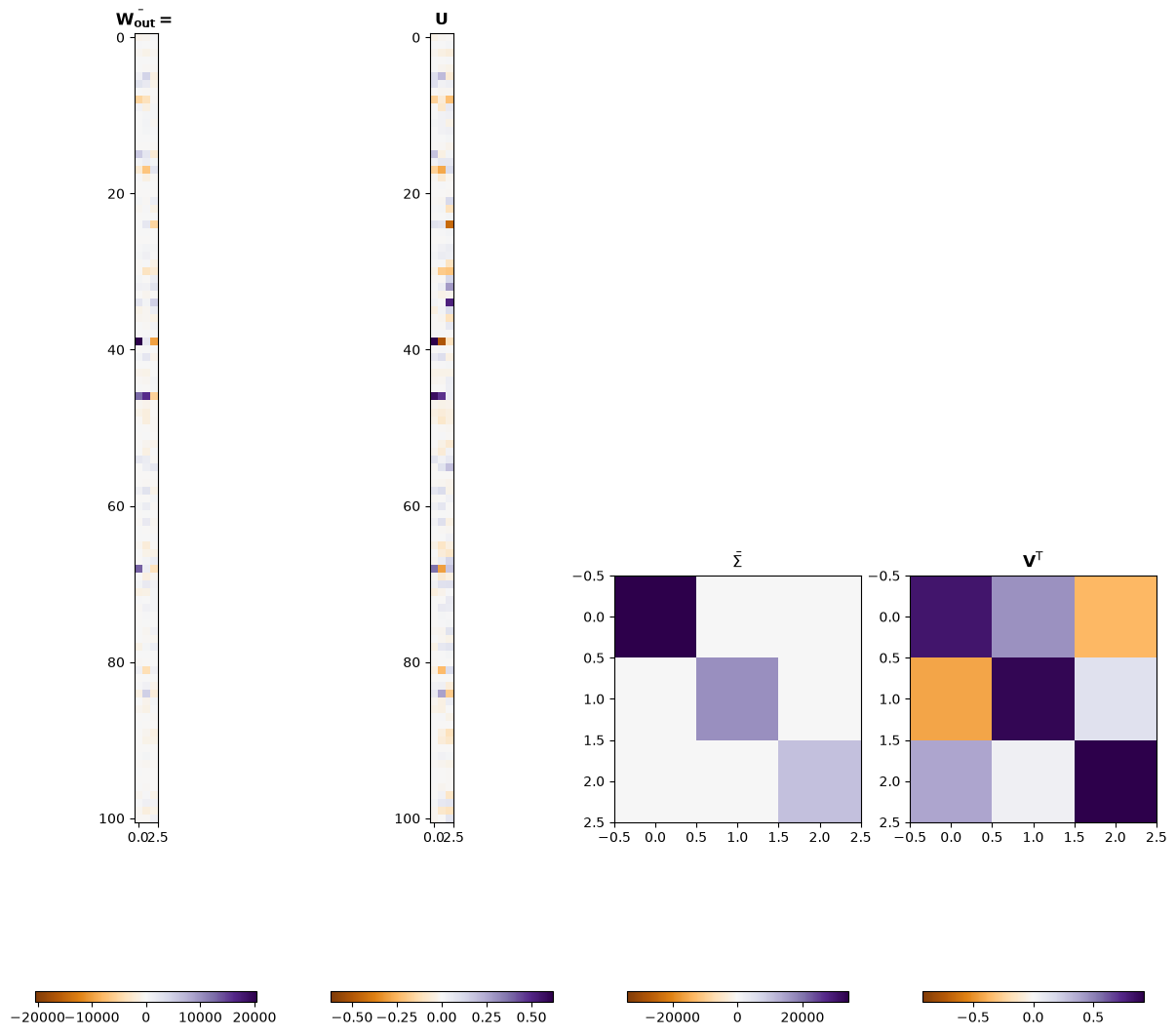
TUTORIAL: Class ESN_model
1. How to setup a ESN_model 
The class ESN_model defined in src.models_data_driven and it combines the classes
* EchoStateNetwork, from tools.esn_core, and
* Model from model.
from romda.models.data_driven import ESN_model
1.1. Data generation 
To create a any model from models_datadriven we need some data to learn. Let's use the Lorenz 63 again.
from romda.plotting import plot_train_dataset
from romda.utils import create_Lorenz63_dataset

dataset, filename = create_Lorenz63_dataset(noise_level=0.02, num_lyap_times=300)


clean_data, noisy_data, t, N_lyap = [dataset[key] for key in ['clean_data', 'noisy_data',
                                                              't', 'N_lyap']]

dt = t[1] - t[0]
t_lyap = N_lyap * dt


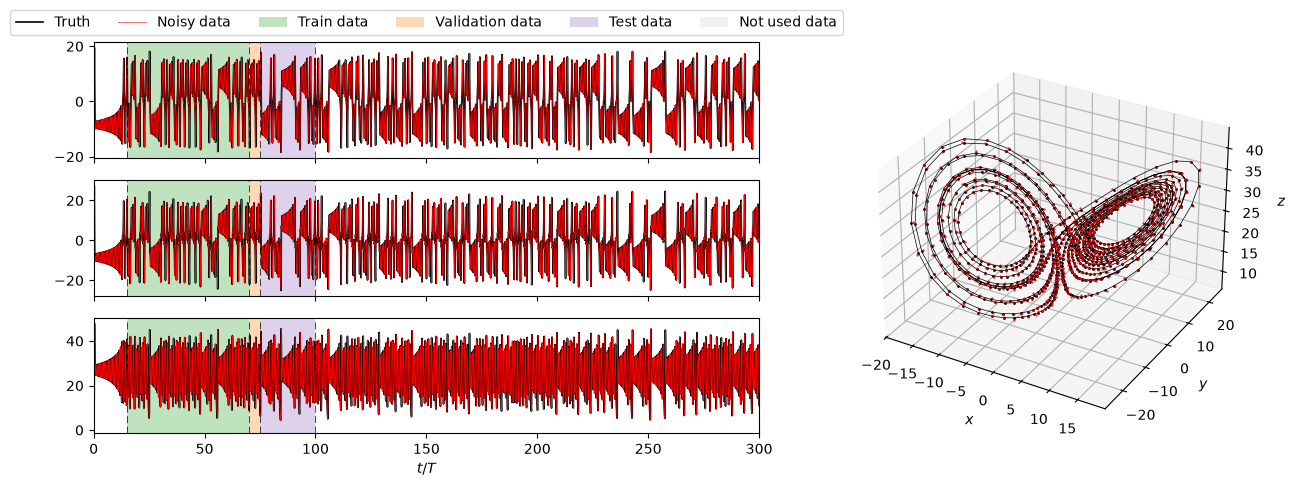
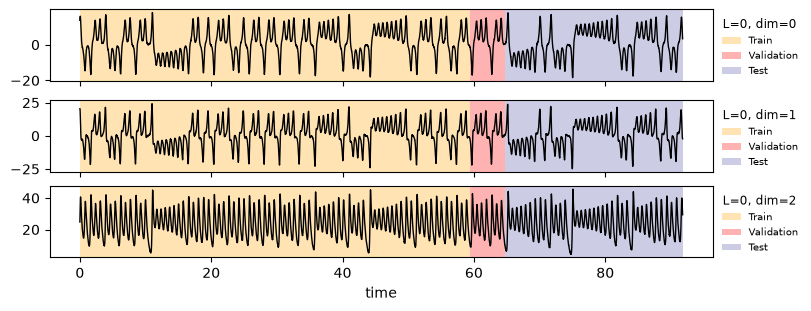
# Split the dataset
N_transient = 15 * N_lyap
N_val = 5 * N_lyap
N_train = 60 * N_lyap - N_val
N_test = 5 * N_val

# Visualize
split_times = [tt / N_lyap for tt in [N_transient, N_train, N_val, N_test]]
plot_train_dataset(clean_data, noisy_data, t/t_lyap, *split_times)
1.2. Initialization with training 
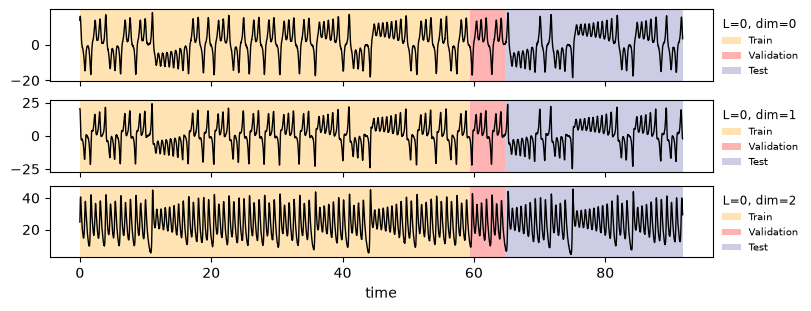
training_data = noisy_data[N_transient:sum([N_transient, N_train, N_val, N_test])]

train_params = dict(N_train=N_train,
                    N_val=N_val,
                    N_test=N_test,
                    dt=dt,
                    upsample=2,
                    N_folds=5,
                    N_grid=4,
                    N_func_evals=20,
                    training_data_filename=filename # Not used in ESN_model itself, but for saving/loading
                    )

# Initialize the ESN model with the training data and parameters.
# This will also perform hyperparameter optimization and training.

model = ESN_model(data=training_data, plot_training=True, **train_params)
model_og = model.copy() # Save the original model for comparison later
Training ESN model...
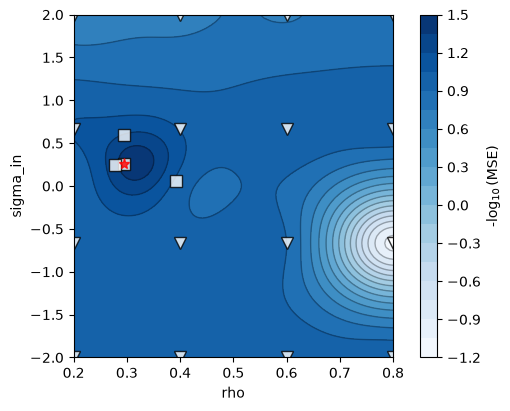
 ----------------- HYPERPARAMETER SEARCH ------------------
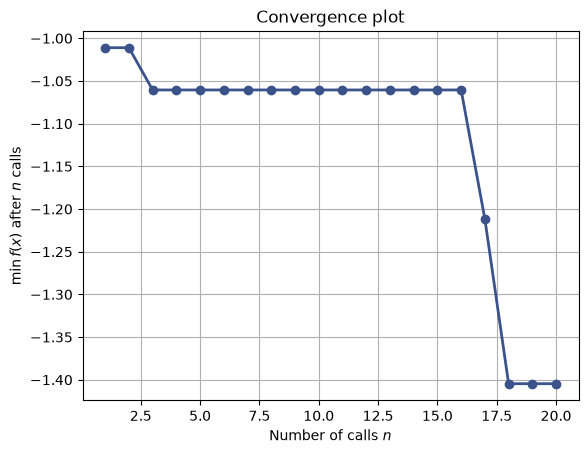
 4^2 grid and 4 points with Bayesian Optimization
         rho     sigma_in    tikh    MSE val


1    2.000e-01   1.000e-02   1.000e-06   -1.0110


2    2.000e-01   2.154e-01   1.000e-12   -0.9565


3    2.000e-01   4.642e+00   1.000e-09   -1.0605
4    2.000e-01   1.000e+02   1.000e-12   -0.6716


5    4.000e-01   1.000e-02   1.000e-09   -1.0099


6    4.000e-01   2.154e-01   1.000e-06   -0.9363


7    4.000e-01   4.642e+00   1.000e-06   -1.0432


8    4.000e-01   1.000e+02   1.000e-06   -0.7200


9    6.000e-01   1.000e-02   1.000e-09   -1.0130


10   6.000e-01   2.154e-01   1.000e-06   -0.9005


11   6.000e-01   4.642e+00   1.000e-12   -1.0207


12   6.000e-01   1.000e+02   1.000e-06   -0.7429


13   8.000e-01   1.000e-02   1.000e-06   -1.0218


14   8.000e-01   2.154e-01   1.000e-06   1.1028


15   8.000e-01   4.642e+00   1.000e-09   -1.0263


16   8.000e-01   1.000e+02   1.000e-06   -0.7667


17   2.944e-01   3.895e+00   1.000e-12   -1.2118


18   2.945e-01   1.818e+00   1.000e-09   -1.4046


19   3.925e-01   1.144e+00   1.000e-06   -1.0246


20   2.774e-01   1.768e+00   1.000e-09   -1.3046


seed 0   Optimal hyperparameters: [0.29450145262857075, 0.2595073828500545], 1e-09, MSE: -1.4045767224890637
Running test for L= 0

Overall tests min, max and mean MSE in 1 tests = -0.9347, -0.9347, -0.9347.
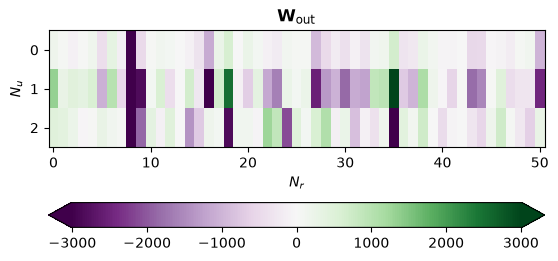
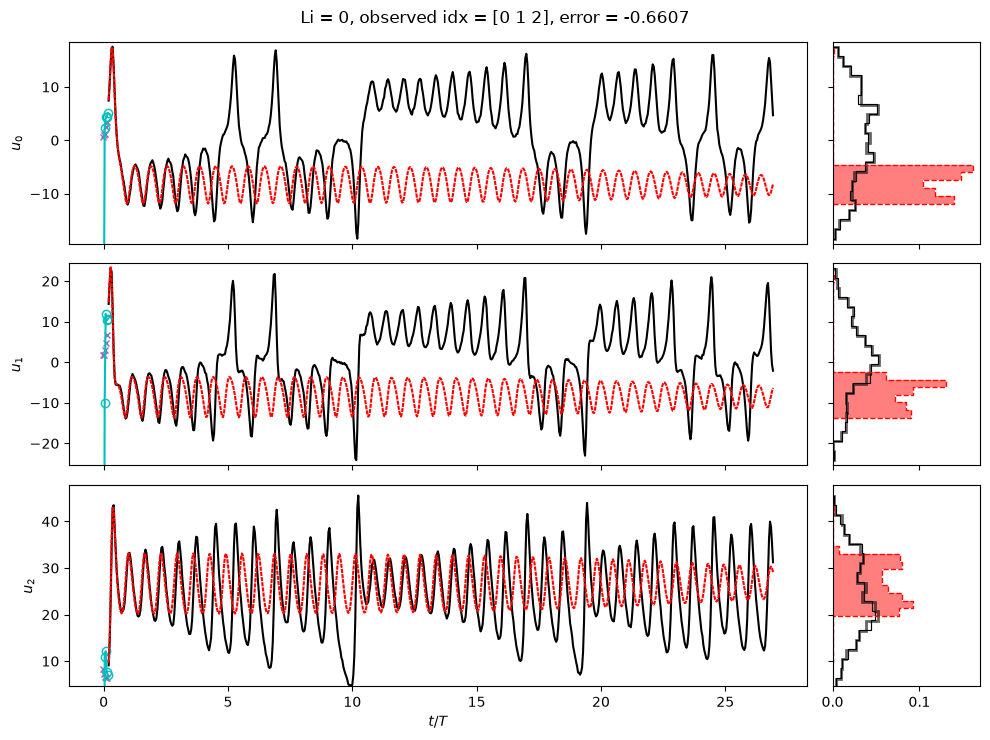
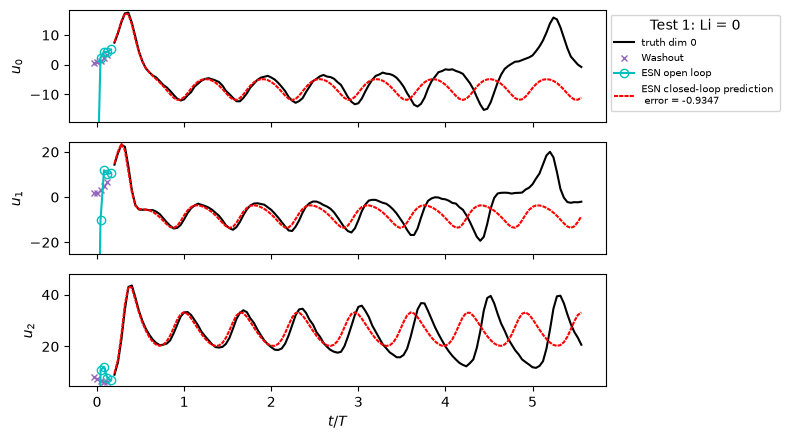
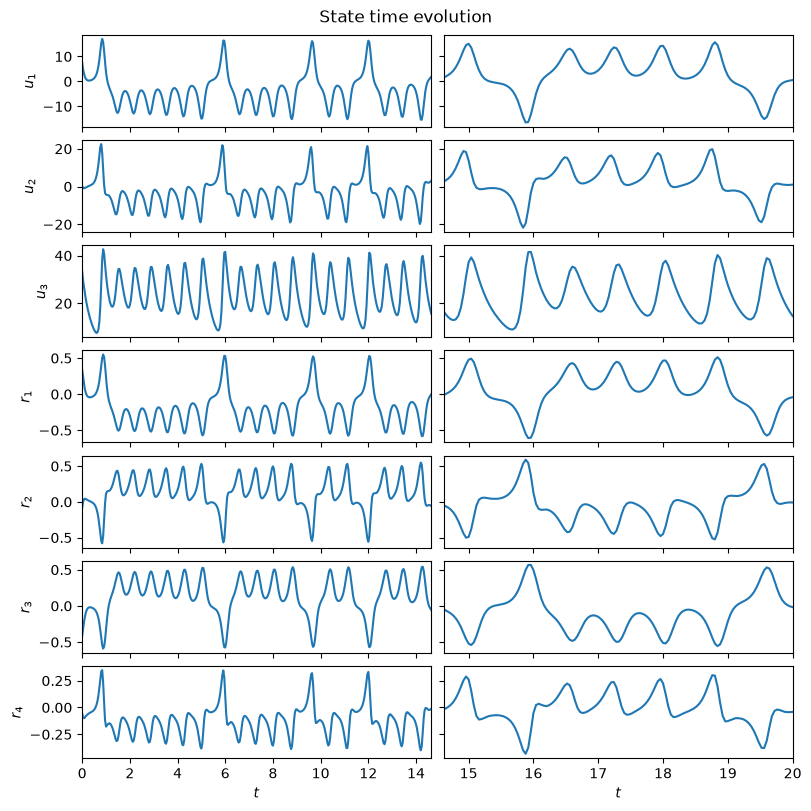
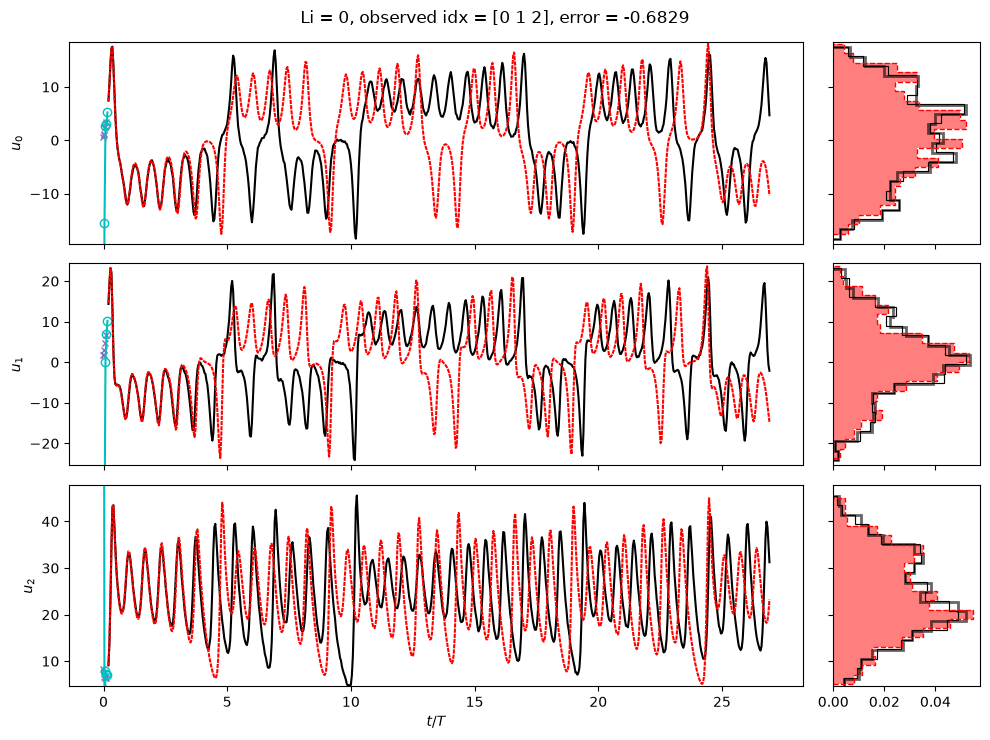
Once initialized, the model behaves as a Model instance (see tutorial 00_Class_Model). For example, we can forecast the ESN as
psi, t = model.time_integrate(1000)
model.update_history(psi, t)

# Visualize the state and reservoir state histories
model.visualize_state_hist(max_modes=7)
1.3. Saving and Loading ESN models 
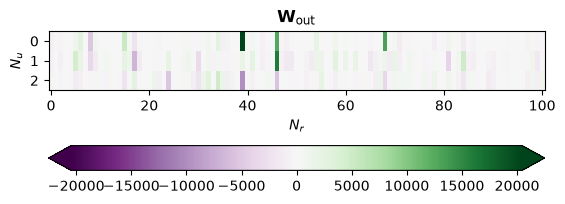
The ESNConfig dataclass from romda.models.data_driven.rnns.esn_config is designed to streamline the loading and saving of ESN models without the need to train them.
The naming of the configs is the hash, which is based on the settings of the ESN_model, and can be used to identify the model configuration. Note that the hash is independent on wether the model is trained or not:
from romda.models.data_driven.rnns import ESNConfig

# Create an ESNConfig from the trained model and get its hash
config = ESNConfig.from_esn_model(model)
hash_from_model = config.to_hash()

# From the same initialization parameters, we should get the same hash even if we did not go through the training process.
config_2 = ESNConfig.from_init_params(data=training_data, **train_params)
hash_from_init_params = config_2.to_hash()

assert hash_from_model == hash_from_init_params, "Hashes do not match! There may be an issue with the hashing or the parameters used for initialization."

print('Model hash == Init params hash:', hash_from_init_params)
Model hash == Init params hash: fa2067c4e7b6931a
(A) Saving the config from the model. This creates a folder under esn_configs with the hash name.
from romda.models.data_driven.rnns import save_esn_model_to_config

saved_config, save_path = save_esn_model_to_config(model) # Note: this will overrite any existing config with the same name
Configuration saved to ...config/esn_configs/fa2067c4e7b6931a/esn_config.yaml
Trained matrices saved to ...config/esn_configs/fa2067c4e7b6931a/trained_matrices.npz
(B) Loading model from config. Ether by providing the config instance to the path to the hash folder
from romda.models.data_driven.rnns import load_esn_model_from_config, ESN_STORE
import numpy as np
from romda.estimators import EnSRKF

loaded_model = load_esn_model_from_config(q=hash_from_model) # load from the hash directly
# loaded_model = load_esn_model_from_config(config=config_2) # load using the query string to find the config

assert loaded_model is not None
#  check that the loaded model produces the same output as the original model
psi_og, t_og = model_og.time_integrate(100)
psi_loaded, t_loaded = loaded_model.time_integrate(100)

assert np.allclose(psi_og, psi_loaded), "Loaded model 1 does not produce the same output as the original model"
✓ Found matching config: fa2067c4e7b6931a
Configuration loaded from ...config/esn_configs/fa2067c4e7b6931a/esn_config.yaml
(C) Auto load/save from initial parameters
from romda.models.data_driven.rnns import auto_load_or_create


# This should load the same config created avobe
loaded_model_2 = auto_load_or_create(data=training_data, **train_params)

psi_loaded, t_loaded = loaded_model_2.time_integrate(100)
assert np.allclose(psi_og, psi_loaded), "Loaded model 2 does not produce the same output as the original model"

# Now, we change a hyperparameter to force creating a new model with a different hash.
train_params_modified = train_params.copy()
train_params_modified['N_units'] = 100

model_new = auto_load_or_create(data=training_data, **train_params_modified, auto_save=True)

print('New hash: ', ESNConfig.from_esn_model(model_new).to_hash())
✓ Found matching config: fa2067c4e7b6931a
Configuration loaded from ...config/esn_configs/fa2067c4e7b6931a/esn_config.yaml
✗ No matching config found
Training ESN model...
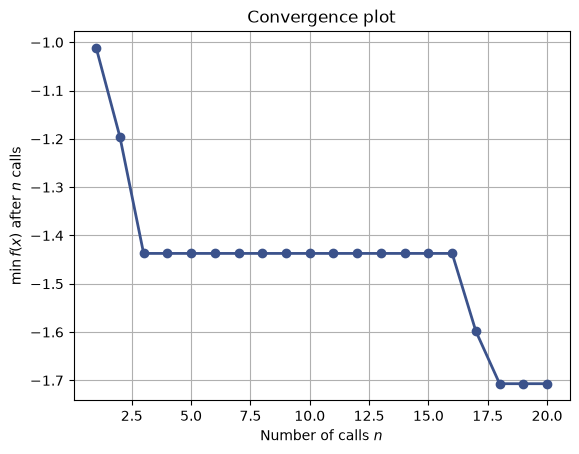
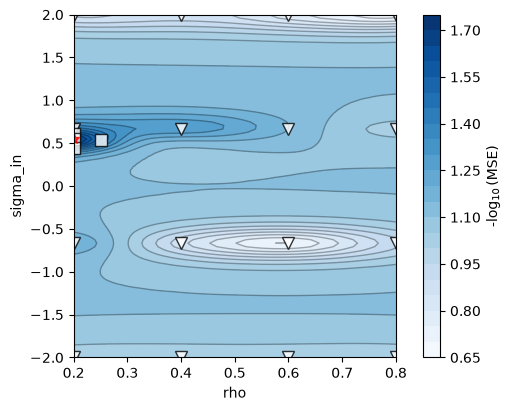
 ----------------- HYPERPARAMETER SEARCH ------------------
 4^2 grid and 4 points with Bayesian Optimization
         rho     sigma_in    tikh    MSE val


1    2.000e-01   1.000e-02   1.000e-09   -1.0113


2    2.000e-01   2.154e-01   1.000e-12   -1.1958


3    2.000e-01   4.642e+00   1.000e-09   -1.4372


4    2.000e-01   1.000e+02   1.000e-09   -0.8430


5    4.000e-01   1.000e-02   1.000e-06   -1.0088


6    4.000e-01   2.154e-01   1.000e-06   -0.8684


7    4.000e-01   4.642e+00   1.000e-09   -1.2897


8    4.000e-01   1.000e+02   1.000e-09   -0.8717


9    6.000e-01   1.000e-02   1.000e-06   -1.0109


10   6.000e-01   2.154e-01   1.000e-09   -0.7011


11   6.000e-01   4.642e+00   1.000e-12   -1.1502


12   6.000e-01   1.000e+02   1.000e-06   -0.7718


13   8.000e-01   1.000e-02   1.000e-06   -1.0050


14   8.000e-01   2.154e-01   1.000e-09   -0.9374


15   8.000e-01   4.642e+00   1.000e-06   -1.0313


16   8.000e-01   1.000e+02   1.000e-06   -0.6824


17   2.000e-01   4.022e+00   1.000e-09   -1.5983


18   2.000e-01   3.521e+00   1.000e-12   -1.7069


19   2.000e-01   2.792e+00   1.000e-12   -1.4617


20   2.503e-01   3.449e+00   1.000e-12   -1.4609


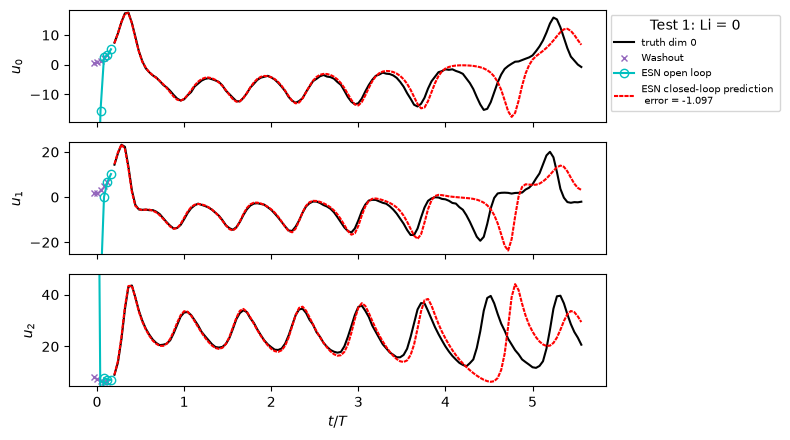
seed 0   Optimal hyperparameters: [0.2, 0.5466552784793368], 1e-12, MSE: -1.7069024506279005


Running test for L= 0 Overall tests min, max and mean MSE in 1 tests = -1.097, -1.097, -1.097.
Saving new model to /storage0/anovoama/romda/src/config/esn_configs
Configuration saved to ...config/esn_configs/24252dfbe49939a3/esn_config.yaml
Trained matrices saved to ...config/esn_configs/24252dfbe49939a3/trained_matrices.npz
New hash:  24252dfbe49939a3
2. Ensemble of ESNs 
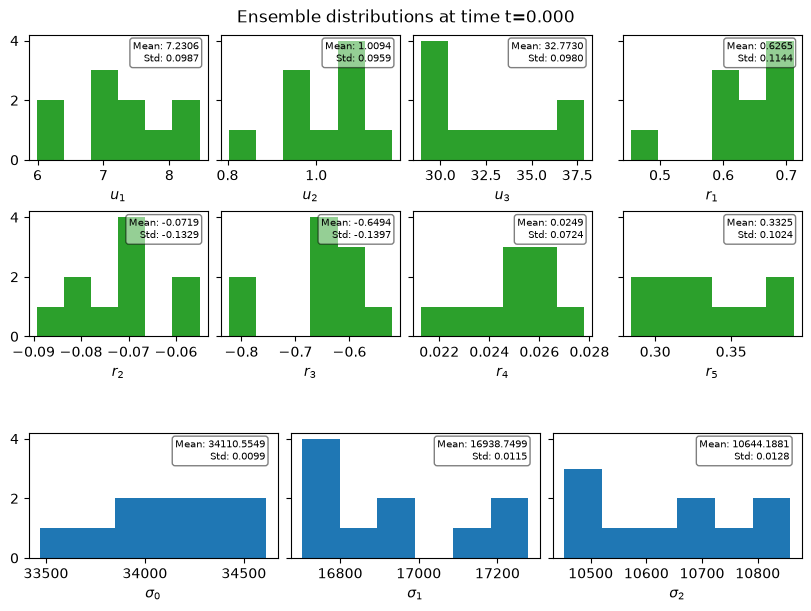
m = 10
ensemble = EnSRKF(parent_model=model_new,
                    m=m,
                    std_phi=0.1,
                    est_alpha=['Wout'], # Select the ensemble varying parameters
                    std_alpha=0.02,  # the parameters uncertainty can also be defined individually in a dictionary
                    # alpha_distr='uniform'
                   )

ensemble.visualize_state(max_modes=6)
! Warning: Could not set attribute Na=1 on Ensemble instance.


OK: Initialized my_ESN_ensemble_m10 history with shape: (1, 106, 10) and [0.]
# from plot_results import plot_obs_timeseries, plot_parameters
for _ in range(10):
    t = ensemble.current_time + 2*t_lyap
    ensemble.forecast_step(t_end=t)
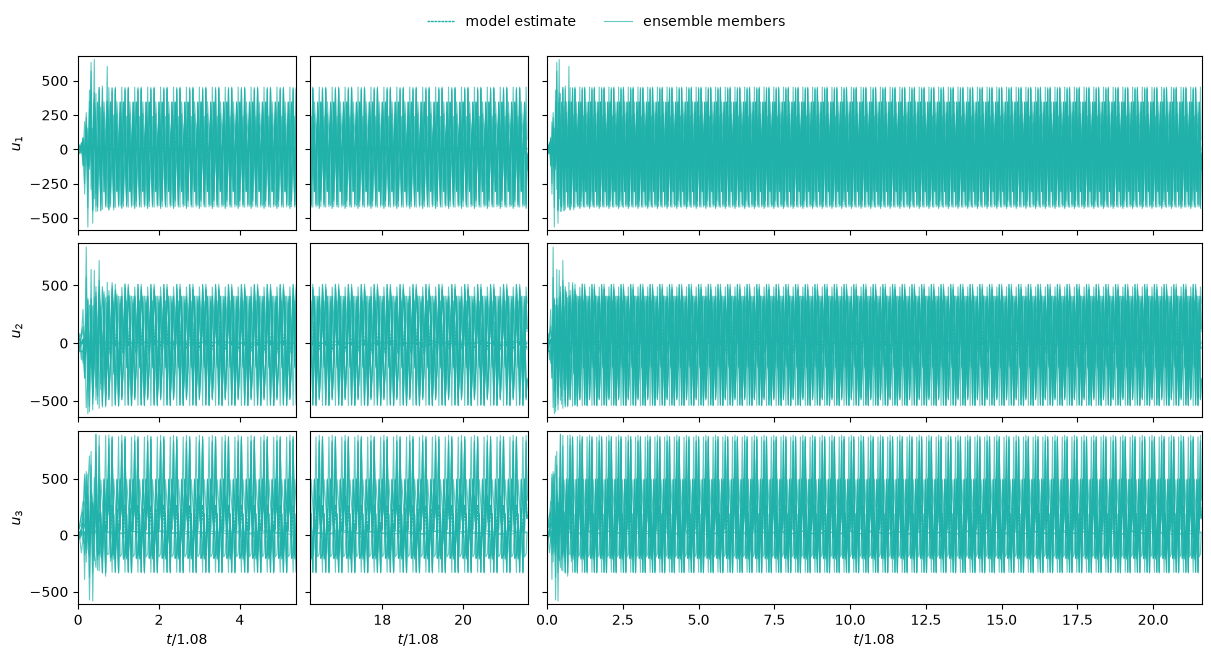
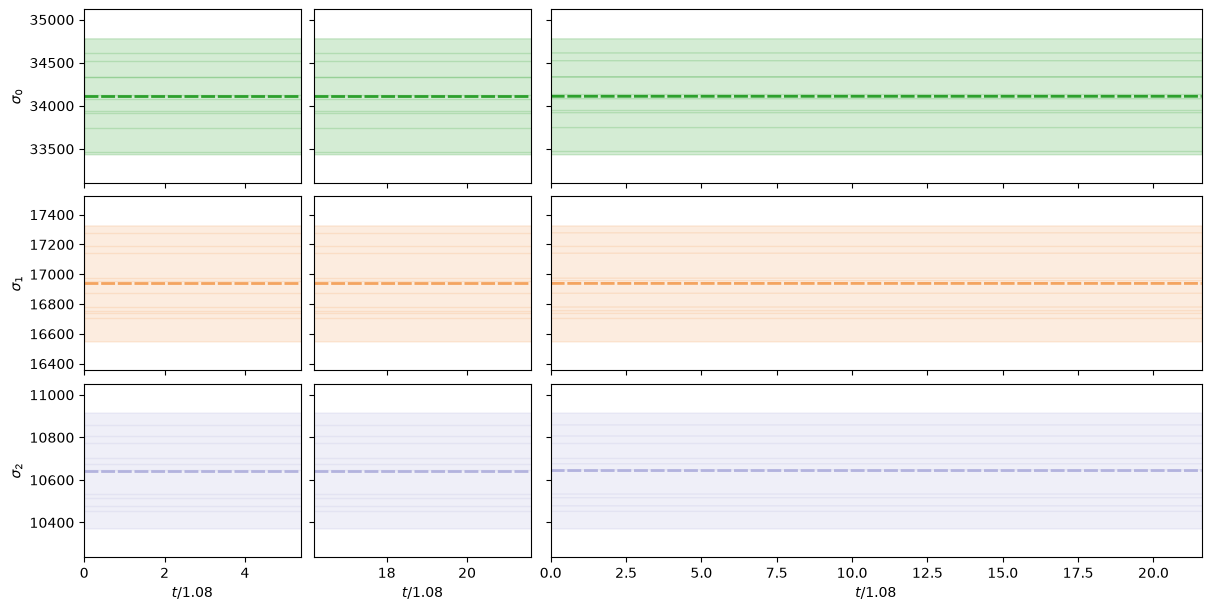
ensemble.visualize_history(plot_members=True, reference_t=t_lyap)
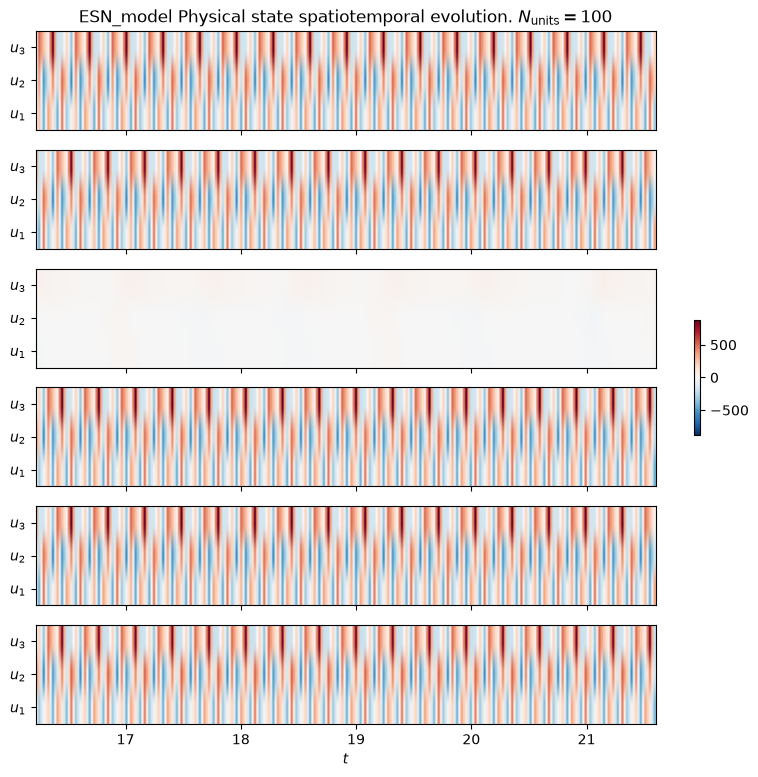
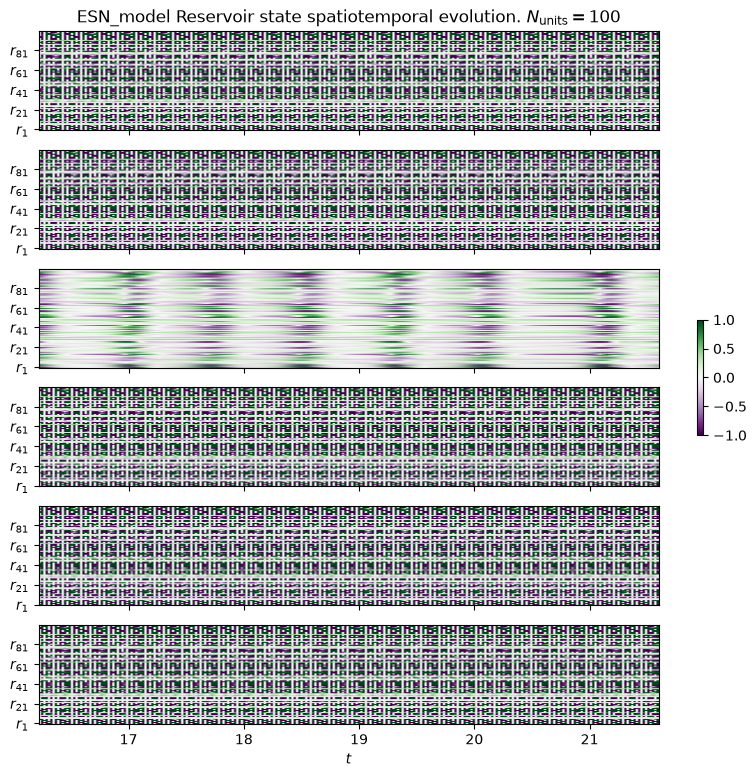
ensemble.model.visualize_spatiotemporal_hist(averaged=False, nrows=6)
ensemble.model.visualize_config()